


July 31, 1941 (Thursday)
LEMONADE, SUCCOTASH, AND CABBAGE SALAD
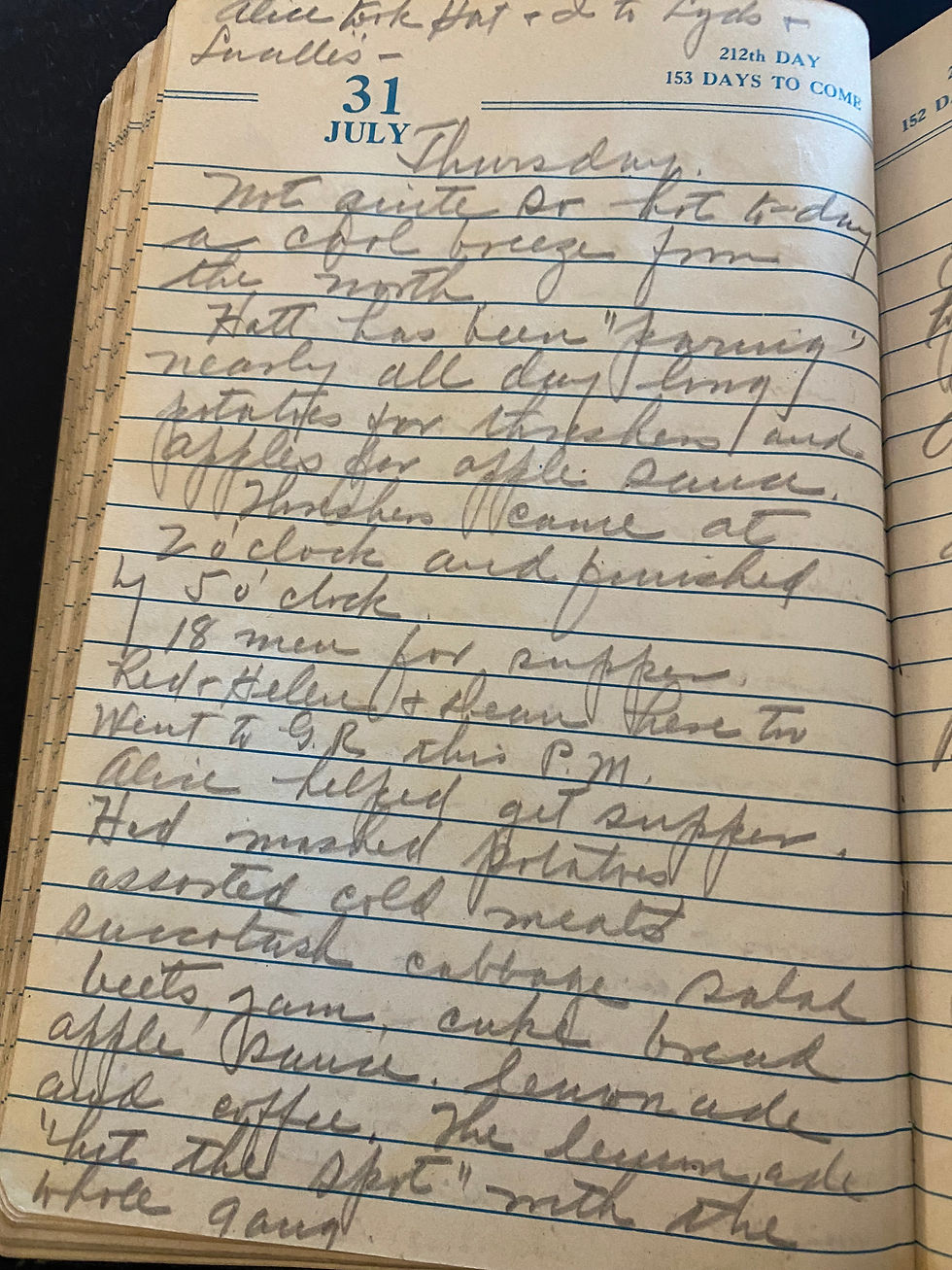
Alice took Hat + I to Lyd's +
Lucille's -
Not quite so hot to-day
a cool breeze from
the north.
Hatt has been "paring"
nearly all day long
potatoes for threshers and
apples for apple sauce.
Threshers came at
2 o'clock and finished
by 5 o'clock.
18 men for supper.
Red + Helen + Dean here too.
Went to G.R. this P.M.
Alice helped get supper.
Had mashed potatoes
assorted cold meats
succotash, cabbage salad
beets, jam, cake, bread,
apple sauce, lemonade
and coffee. The lemonade
"hit the spot" with the
whole gang.
Edna shares a lot of great information in her journals but recipes are not included. This journal entry had me curious about cooking and recipes and food. Did Edna and other women like her use cookbooks? Did they use recipes passed down to them? Did they add their own "special touches" to traditional recipes?

The Betty Crocker Cookbook wasn't published until 1950. The Joy of Cooking was self-published by Irma Rombauer in 1931 but didn't begin to reach a commercial audience until its second publication in 1936. By then, Edna had a well-established kitchen of her own. I don't imagine she ran out and purchased a copy for herself.
I decided to look for vintage recipes for cabbage salad and succotash, two dishes Edna served to the threshers.
When Dutch colonist first came to the New World, they brought many traditional recipes with them including koolsla, a salad made from chopped cabbage and vinegar dressing. . This simple version of a cabbage salad was fairly consistent in cookbooks until the 1930's when recipe makers began to suggest adding fruit and vegetables and spiced things up a bit with a variety of seasonings and dressings.
In her 1931 edition of The Joy of Cooking, Rombauer suggested adding green peppers, apples, and celery to cabbage salads.

It isn't until 1944 that the traditional coleslaw we are familiar with today (the one with carrots and mayonnaise dressing) appears in a cookbook entitled The Household Searchlight Recipe Book.
For those of you that don't know, I love books and had the good fortune to work within the book and publishing industry for many years. I tell you this so you understand why at this point in my post I got very curious about what the first cookbook published in the United States might be.
Well, it was American Cookery by Amelia Simmons.
American Cookery was published in 1796. The words "An American Orphan" appear under the author's name on the title page of the book.
Little is known about Simmons. Many agree that she was likely a woman of modest means who gained her culinary knowledge working in a kitchen of a large home. Some think that perhaps she was a wealthy woman who used "American Orphan" because, at that time, writing was considered unsuitable for proper women.
No matter her social status, Simmons' American Cookery helped to define American cuisine and culture. Prior to the publication of her cookbook, American colonists used British cookbooks with traditional British staples. In American Cookery, Simmons used items like corn, turkey, squash, pumpkin and potatoes that were indigenous to the New World.
Listen to this fascinating podcast all about Simmons and the long-lasting impact of American Cookery in the culinary world.
Back to Edna and feeding the threshers. I think it is safe to assume that her cabbage salad probably didn't contain carrots or fruit or mayonnaise.
But, what about her succotash?
Succotash comes from the Narragansett Indian word "msickquatash.” Most often the dish contained three staples from traditional Narragansett crops; corn, beans and squash.
I know my dad loves lima beans and for that reason alone, I am going to bet that Edna's succotash contained corn (of course) and lima beans.
Of all of the things my great grandmother served to the threshers on this day, the thing I want the most is a glass of that lemonade that "hit the spot."
I don't care for lima beans.


Comments